
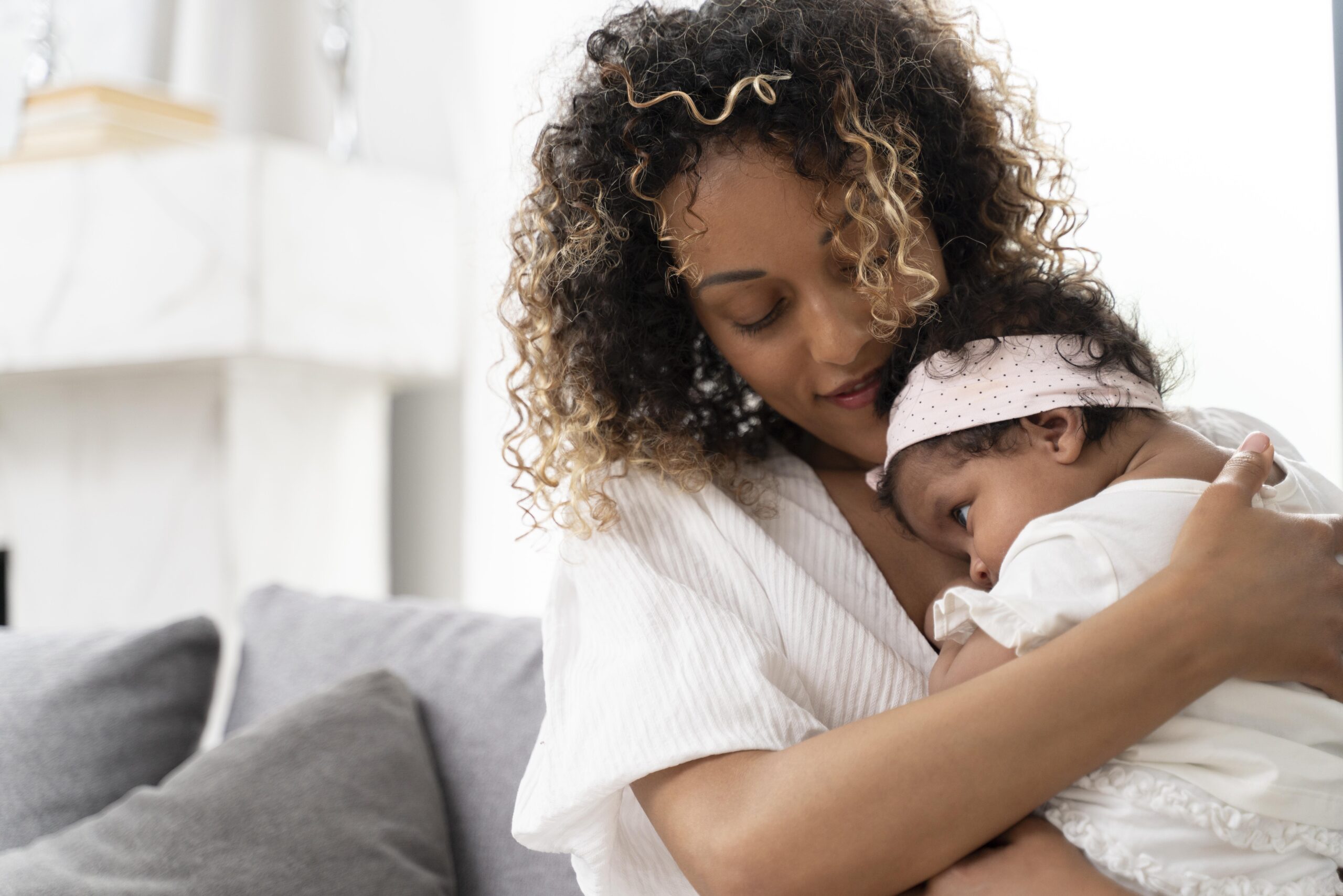
The word postpartum comes from the verb "to give birth," which in earlier Dutch meant "to bear" or "to bring into the world." The term is ancient and refers to the period immediately after childbirth during which the mother recovers and is cared for.
Many people associate the postpartum period primarily with biscuits with sprinkles, visits from friends and family, and a few days of help from maternity care. But actually, the postpartum period is a much larger transition phase. Not only physically, but also emotionally, hormonally, and mentally, a lot changes in a short time.
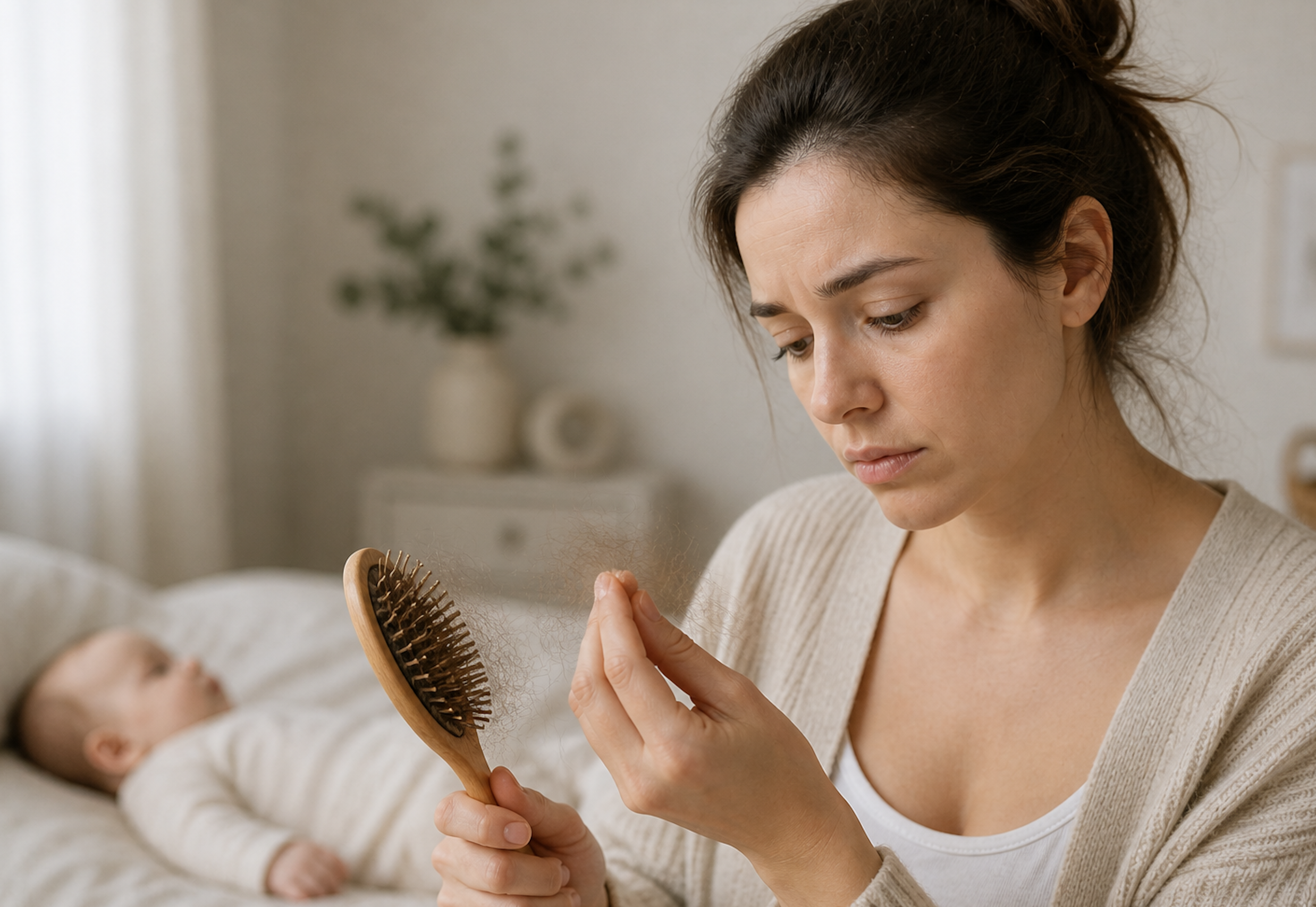
The first weeks after childbirth are intense for many women. Your body is recovering from pregnancy and childbirth while you are also learning to care for a baby who is completely dependent on you. Sleep deprivation, emotions, physical complaints, and a completely new rhythm all come together in the same period.
Yet, in society, there is often a lighthearted attitude towards recovery after childbirth. As if everything should be 'normal' again after a few days. While many women only realize weeks or even months later how much impact childbirth has actually had.
Earlier
Additionally, it is related to the word "postpartum woman," which refers to the woman who has just given birth, and "postpartum room," the space where the birth took place and where mother and baby stayed.
In earlier times, the postpartum woman usually stayed indoors for six weeks to rest and recover. This was seen as a sacred period in which she was still 'between two worlds': that of giving birth and that of ordinary life.
The term is thus rooted in ancient traditions and has always had a strong link with care, protection, and recovery after childbirth.
In many cultures, traditions still exist surrounding this first period after birth. Think of women who are cared for by family for forty days, receive special nutritious meals, or are exempt from household tasks.
These traditions did not arise without reason. People recognized centuries ago that childbirth demands a lot from a body. Rest, warmth, nutrition, and support were seen as essential for proper recovery.
Nowadays, we often live faster. Many women feel pressure to start doing things again, receive visitors, or quickly find 'the old version of themselves' again. But a body that has carried a pregnancy for nine months does not recover in a few days.
Why the first weeks are so intense
In the first weeks after childbirth, many processes occur simultaneously in the body:
- The uterus shrinks back to normal size
- Hormones change very quickly
- Injuries from childbirth need to heal
- The bleeding can last for days to weeks
- Breastfeeding needs to get started
- The pelvic floor and abdominal muscles recover
- The sleep rhythm changes completely
Many women underestimate in advance how much energy this costs. Especially since you are also responsible for a baby that needs care day and night.
Therefore, many mothers feel vulnerable, emotional, or easily overwhelmed in the early period. This is not strange. It is a huge physical and mental transition.
6 weeks
Officially, the postpartum period in the Netherlands is still often seen as the first six weeks (42 days) after childbirth, as this is the period in which the body recovers from pregnancy and childbirth.
After about six weeks, a follow-up check usually takes place with the midwife or gynecologist. Often, this involves looking at physical recovery, blood loss, stitches, and contraception.
But many women find that recovery does not stop after that check-up.
The body may feel better, while energy, emotions, or mental balance are still far from restored. Some women only feel a bit like themselves again after months.
Why many women think that the postpartum period only lasts 8 days
In practice, "postpartum period" often refers to the first 8 to 10 days. This is because maternity care in the Netherlands is usually available for a maximum of 10 days after childbirth.
During this period, the mother receives support with:
- recovery after childbirth
- baby care
- feeding
- stitches and check-ups
- starting parenthood
- practical explanation and guidance
After this period, the general practitioner or the child health clinic often takes over the care.
Many women experience a turning point here. Suddenly, the daily support disappears, while fatigue begins to build up.
The adrenaline from childbirth gradually decreases. Visitors sometimes expect that everything is "fine" again. Partners often return to work. And it is precisely then that many mothers realize how significant the transition actually is.
The mental side of the postpartum period
There is increasing discussion about physical recovery, but the mental transition still does not always receive enough attention.
Becoming a mother changes a lot:
- your daily freedom changes
- your relationship changes
- your identity changes
- your body feels different
- responsibilities become greater
- emotions can come in more intensely
Many women recognize feelings of insecurity, guilt, loneliness, or overwhelm.
Some are shocked by the intensity of motherhood. Not because they do not love their baby, but simply because it is a lot to handle.
There is still often too little honest discussion about this.
Postpartum tears and hormones
In the first days after childbirth, many women experience postpartum tears. This arises from sleep deprivation, release, and enormous hormonal changes.
You may be more emotional, cry more easily, or suddenly feel insecure.
That is usually normal and often goes away within a few days.
If gloomy feelings persist longer or increase, it is important to ask for help. Postpartum depression, anxiety issues, or overload are more common than many people think.
How long does recovery really take?
That question is difficult to answer in one sentence.
Some women feel physically strong again after a few weeks. Others need months to regain their energy.
The delivery itself also plays a role:
- was it a long labor?
- were there complications?
- was there a cesarean section?
- how is the feeding going?
- how is the sleep?
- how much support is there at home?
Recovery therefore varies for everyone.
Yet many women recognize that the first six weeks are actually just the beginning of a larger transition to motherhood.
What helps during the postpartum period?
Many women primarily need practical support and realistic expectations.
Things that can help:
- accepting help
- nourishing meals
- drinking enough
- planning less visits
- taking moments of rest
- letting go of expectations
- talking openly about emotions
- asking for support when needed
Not everything has to go perfectly right away.
The postpartum period is not about recovering quickly or having everything under control. It is about gradually adjusting to a completely new phase in your life.
A period that deserves more attention
Many women only realize afterwards how significant the impact of the first weeks after delivery was. That is precisely why the postpartum period deserves more attention than just the first few days after birth. Because recovery is not only about stitches or blood loss. It is also about energy, identity, emotions, relationships, and adjusting to a new life as a mother. And perhaps that is exactly why old traditions used to place so much emphasis on protection, support, and rest around childbirth.
Do you want more explanation about this period? See my online course developed especially for women like you.